Real Results: How 5 Small Businesses Transformed Their Phone Operations with AI
Five small businesses went from missing 40% of calls to answering 100%. A plumber captured $3,200/month in lost revenue, a salon added 25 bookings per month, and a locksmith cut phone costs by 75%. Here are their stories and the real numbers behind each transformation.
Greet Team
Success Stories
Stories composited from real Greet customer experiences to protect privacy. Names, locations, and identifying details have been changed, but the numbers and outcomes reflect actual results achieved by Greet users.
Every small business owner knows the feeling. You're elbow-deep in a job, your phone rings, and you have a split-second decision to make: answer the call and lose focus, or let it go to voicemail and hope the caller doesn't dial your competitor next.
For most small businesses, the answer is the same. The call goes unanswered. And then another. And another. Industry data suggests that small service businesses miss between 30% and 60% of incoming calls. That's not just an inconvenience. It's a revenue leak that compounds every single day.
But what happens when that leak gets plugged? What happens when every single call gets answered, every lead gets captured, and every customer feels like they're your top priority?
We talked to five small business owners who made the switch to Greet, an AI-powered phone receptionist, and the results weren't just good. They were transformative. These businesses went from missing 40% of calls to answering 100% of them. Here's how each one did it.
Story 1: Mike's Plumbing -- Solo Plumber, Austin, TX
The Problem: $3,000-$4,000 Per Month Disappearing to Competitors
Mike had been running his plumbing business solo for seven years. He was good at his job, had solid reviews, and never lacked for work. But there was a problem he couldn't wrench his way out of: when he was under a sink or inside a wall, he couldn't answer the phone.
"I'd come up for air after a two-hour job and see three missed calls," Mike explained. "By the time I called back, at least one of them had already booked someone else. The worst part was the emergency calls. Someone's got a burst pipe at 6 AM and they're calling every plumber in Austin. If you don't pick up in the first ring or two, you're done."
Mike estimated he was losing between $3,000 and $4,000 per month in emergency work alone. That's work that went to competitors not because they were better, but because they answered the phone first.
He tried a few solutions. He set up a voicemail greeting that promised a callback within 30 minutes. He hired his teenage daughter to answer during summer breaks. He even tried an answering service, but at $1.50 per minute, the costs added up fast and the operators couldn't answer basic plumbing questions.
The Solution: Greet Handles Every Call, Routes Emergencies via SMS
Mike set up Greet on a Thursday evening. He loaded in his FAQs -- service area, pricing ranges, emergency protocols -- and configured it to send him an immediate SMS alert whenever a caller mentioned words like "flood," "burst," "leak," or "emergency."
"The setup took maybe 20 minutes," Mike said. "I was skeptical. I figured callers would hang up the second they realized it wasn't me. But the next morning, I got my first SMS alert at 6:15 AM. A property manager had a water heater leaking in a rental unit. Greet answered, got the details, texted me, and I called back within 90 seconds. I had the job booked before I'd even had coffee."
For non-emergency calls, Greet answered questions about Mike's availability, service area, and pricing, then captured the caller's information so Mike could follow up during breaks. Learn more about how AI phone systems help plumber business growth.
The Results
Call answer rate: From roughly 40% to 100%
New revenue captured: $3,200/month in jobs that previously went to competitors
Booked jobs: 40% increase in total booked jobs
Business growth: Revenue increase allowed Mike to hire a second plumber within 4 months
"I went from solo operator to a two-person crew in under six months," Mike said. "And the funny thing is, I didn't get more customers. I just stopped losing the ones who were already calling me."
Story 2: Bella's Hair Studio -- 3-Chair Salon, Chicago, IL
The Problem: After-Hours Bookings Falling Through the Cracks
Bella opened her salon five years ago and built it into a thriving three-chair operation. She had a part-time receptionist, a loyal client base, and a packed schedule. But she had a blind spot: evenings and weekends.
"Most of my clients are working professionals," Bella explained. "They want to book appointments at 8 PM on a Tuesday or 10 AM on a Sunday when they're planning their week. But my receptionist works 9 to 5, Tuesday through Saturday. Every call outside those hours went to voicemail, and maybe half of those people actually left a message. The rest just booked with someone else."
The no-show problem made things worse. Without a system for confirmations and reminders, Bella's no-show rate hovered around 15%. Each empty chair slot cost her between $75 and $200, depending on the service.
The Solution: 24/7 Booking Through Google Calendar Integration
Bella connected Greet to her Google Calendar and set up her appointment types -- cuts, color, highlights, blowouts -- each with the correct duration and stylist assignments. Greet could now see real-time availability and book clients directly into open slots, any time of day or night.
"The first weekend after setup, I woke up Monday morning to six new appointments that had been booked between Friday night and Sunday afternoon," Bella said. "Six appointments I would have completely missed before. That was over $700 in revenue just from the first weekend."
Greet also handled the common questions that ate up her receptionist's time: pricing, parking directions, cancellation policy, and whether the salon accepted walk-ins. For more on how salons benefit from AI phone systems, see our guide on salon AI receptionist solutions.
The Results
No-show reduction: 35% fewer no-shows
After-hours bookings: 20% increase in bookings from calls outside business hours
Additional appointments: 25 more appointments per month
Receptionist impact: Part-time receptionist could focus on in-salon client experience instead of being tethered to the phone
"My receptionist used to spend half her day on the phone," Bella said. "Now she greets clients at the door, offers them coffee, makes sure they're comfortable. The in-person experience got so much better because she wasn't constantly interrupted by the phone ringing."
Hear your business answer the phone in 60 seconds.
Enter your website URL. We'll build an AI that knows your services, hours, and policies. Then call it. No signup required.
Story 3: Pawfect Grooming -- Pet Grooming Shop, Denver, CO
The Problem: Holiday Season Chaos
If you've ever tried to book a pet groomer before the holidays, you know the struggle. For Pawfect Grooming, a three-person operation run by owner Diana, the weeks before Thanksgiving, Christmas, and summer vacation were absolute chaos.
"During peak season, we'd get 50 to 60 calls a day," Diana said. "On a normal day, it's maybe 15. We're a small shop. I groom dogs. My two employees groom dogs. None of us can stop mid-groom to answer the phone when we've got a nervous golden retriever on the table."
Diana's previous solution was to hire a temporary front desk person during the holidays. That meant recruiting, training, and paying someone $15 to $18 an hour for 6 to 8 weeks, just to answer phones. Total cost: around $4,000 per season. And the temp never knew the answers to breed-specific questions like grooming frequency for doodles versus short-haired breeds, or how long a full groom takes for a large dog.
The Solution: AI-Powered Overflow with Breed-Specific Knowledge
Diana loaded Greet with her full service menu, breed-specific grooming details, pricing tiers by dog size, and her holiday scheduling rules. She set it up to answer overflow calls when she and her team were busy, and all calls outside business hours.
"I spent about 30 minutes putting in all our breed information," Diana said. "Things like, 'Goldendoodles need grooming every 6-8 weeks,' or 'We recommend a puppy's first groom at 12-16 weeks.' These are questions we get dozens of times a day, and Greet handles them perfectly."
During the holiday rush, Greet managed the surge without breaking a sweat. It booked appointments, answered questions about holiday scheduling deadlines, and even handled the inevitable "Can you squeeze my dog in before Christmas?" calls with grace and accurate availability information. Discover more about how AI helps in our pet grooming AI receptionist guide.
The Results
Peak call volume handled: 50+ calls/day managed with zero additional staff
Seasonal labor savings: $4,000 saved by not hiring temporary front desk help
Customer satisfaction: Callers got immediate, knowledgeable answers instead of hold music or voicemail
Year-round benefit: Diana kept Greet running after the holidays, freeing her team to focus on grooming full-time
"The temp we used to hire couldn't tell you the difference between a teddy bear cut and a puppy cut," Diana said. "Greet can. And it doesn't call in sick on the busiest Saturday of the year."
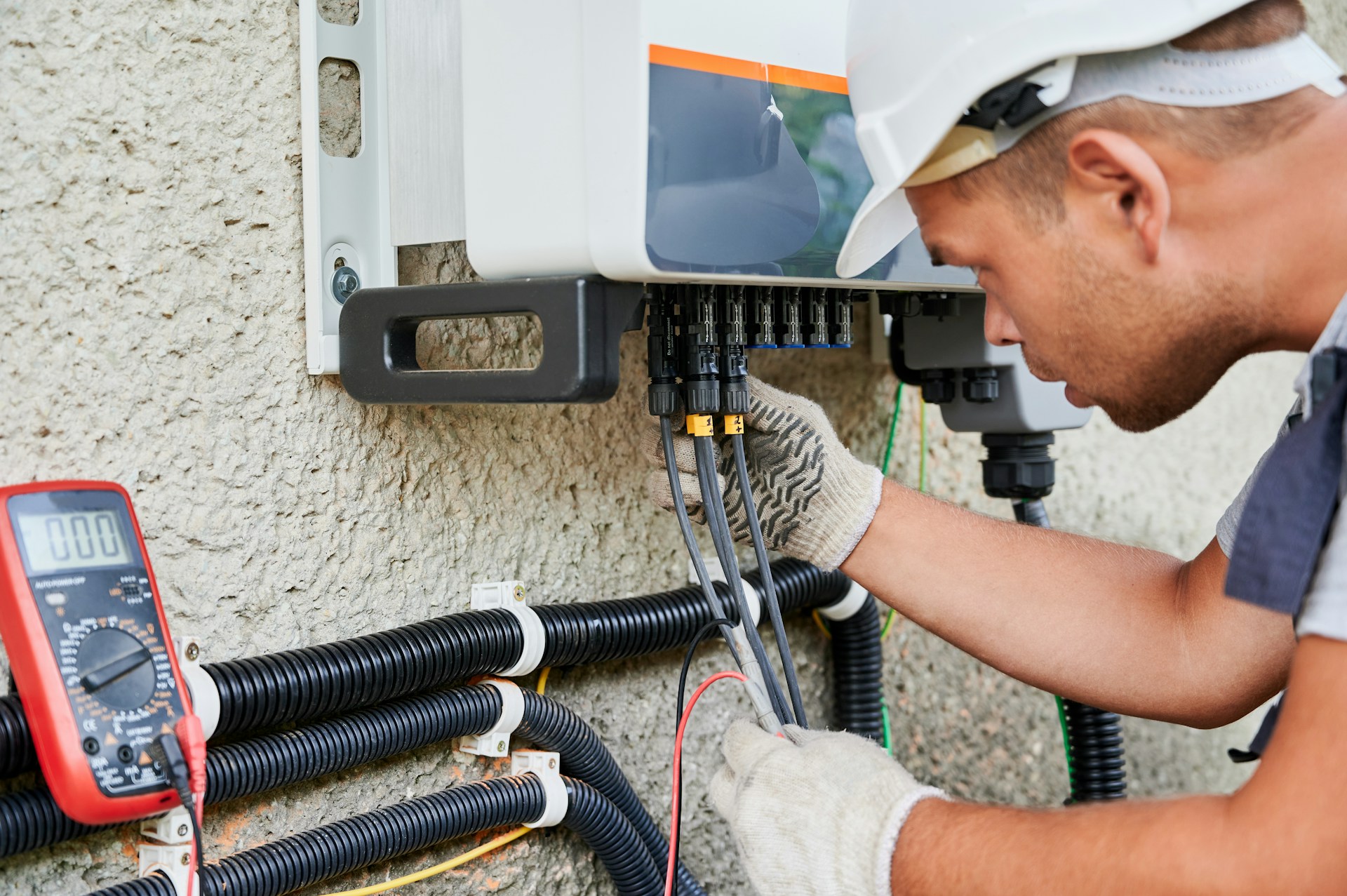
Story 4: Spark Electric -- Electrician, Nashville, TN
The Problem: Missing High-Value Commercial Leads
James ran Spark Electric as a residential electrician for years before he started getting inquiries from commercial property managers. The problem was that property managers operate on a different schedule. They're making calls at 6 AM before their day starts, or at 7 PM after their last property walkthrough. James's phone was off during those hours.
"I didn't even realize how many commercial leads I was missing until I checked my voicemail stats," James said. "Over three months, I had 14 voicemails from property management companies. I called every one back, but by the time I reached them, most had already hired someone else. These aren't $200 residential jobs. These are $2,000-a-month maintenance contracts."
The cost of missed calls was staggering. Each commercial contract represented recurring monthly revenue that compounded over time. Missing those early-morning and late-evening calls wasn't just losing a one-time job. It was losing a long-term client relationship.
The Solution: 24/7 Commercial Lead Capture with Priority Flagging
James configured Greet to treat commercial inquiries differently from residential ones. When a caller mentioned property management, multi-unit buildings, or commercial maintenance, Greet flagged the call as high-priority and sent James an immediate SMS with full details.
"I set up a few trigger phrases," James explained. "Things like 'property manager,' 'commercial building,' 'maintenance contract,' 'multiple units.' When Greet hears those, it knows to get as much detail as possible -- building address, scope of work, timeline -- and text me right away."
For standard residential calls, Greet answered questions about services, availability, and pricing, and scheduled callbacks during business hours. Read more about how AI supports electrician business growth.
The Results
New commercial contracts: 3 maintenance contracts landed within the first 2 months
Recurring revenue: $6,000/month in new recurring commercial revenue
Lead response time: From next-day callback to same-hour response for high-value leads
Business mix: Commercial work now represents 40% of revenue, up from less than 5%
"One of those property managers told me straight up: 'I called four electricians that morning. You were the only one who got back to me before lunch,'" James said. "That one contract is worth $24,000 a year. Greet paid for itself for the next decade with that single call."
Story 5: QuickKey Locksmith -- Emergency Locksmith, Phoenix, AZ
The Problem: An Answering Service Eating Into Margins
Emergency locksmith work is a 24/7 business. People get locked out of their cars at 2 AM, lose their house keys on holidays, and need lock changes after break-ins at all hours. Carlos, owner of QuickKey Locksmith, knew he needed round-the-clock phone coverage. His solution for three years had been a traditional answering service.
"The answering service charged $1.75 per minute," Carlos said. "The average call lasted about 3 to 4 minutes. At 40 to 50 after-hours calls per month, I was spending around $800 just on phone answering. And the quality was inconsistent. The operators didn't know locksmith terminology. They couldn't tell the difference between a rekey and a lock change. Half the time, they'd take a message and I wouldn't get it for 20 minutes."
In the emergency locksmith business, 20 minutes is an eternity. Someone locked out of their car in a dark parking lot at midnight isn't going to wait. They're calling the next locksmith on Google. For more on how AI is transforming the locksmith industry, read our locksmith AI receptionist article.
The Solution: AI-Powered 24/7 Dispatch at a Flat Monthly Rate
Carlos switched to Greet and immediately noticed the difference. Greet answered every call instantly, asked the right questions (location, type of lockout, vehicle make and model for car lockouts), and dispatched the information to Carlos via SMS in under 30 seconds.
"The first night on Greet, I got a call at 1:30 AM," Carlos said. "Someone locked out of their apartment. Greet answered, confirmed the address, told the caller our estimated arrival time and pricing, and texted me everything I needed. I was in my truck within two minutes. With the old service, that same call would have taken 8 to 10 minutes just to get through the operator and reach me."
Greet also handled the common non-emergency questions -- pricing for lock changes, whether QuickKey serviced certain neighborhoods, hours for the storefront -- without Carlos ever needing to pick up the phone.
The Results
Phone cost reduction: From $800/month to approximately $200/month, a 75% savings
Response time: From 8 minutes average to under 2 minutes from call to dispatch
Customer satisfaction: Google review rating improved from 4.2 to 4.7 stars, with multiple reviews mentioning fast response
Call quality: Greet's locksmith-specific knowledge meant callers got accurate information instead of generic hold scripts
"My customers don't know they're talking to AI," Carlos said. "They just know that when they call QuickKey, someone picks up immediately, asks the right questions, and I show up fast. That's all that matters when you're locked out at 2 AM."
Is your business ready for an AI receptionist?
5 signs you're leaving money on the table-and 2 when you might want to wait. Take 2 minutes to find out.
The Aggregate Picture: Results Across All Five Businesses
When you zoom out and look at the combined impact across these five businesses, the patterns are striking:
Business
Industry
Before Greet
After Greet
Key Metric
Mike's Plumbing
Plumbing
60% calls missed, $3-4K/mo lost
100% answer rate, hired 2nd plumber
+$3,200/mo revenue
Bella's Hair Studio
Salon
No after-hours booking, 15% no-shows
24/7 booking, 35% fewer no-shows
+25 appointments/mo
Pawfect Grooming
Pet Grooming
50+ calls/day overwhelmed team
Zero additional hires needed
$4K saved in seasonal labor
Spark Electric
Electrical
Missing after-hours commercial leads
3 new commercial contracts
+$6K/mo recurring revenue
QuickKey Locksmith
Locksmith
$800/mo answering service, 8-min response
75% cost reduction, under 2-min response
$600/mo saved + faster dispatch
Combined monthly impact across all five businesses: over $10,000 in additional revenue or savings per month. That's more than $120,000 per year in value generated by simply answering the phone.
Common Patterns Across All 5 Businesses
Despite operating in completely different industries, these five businesses shared remarkably similar experiences. Here are the patterns that emerged:
1. The Revenue Was Already There -- They Were Just Missing It
None of these businesses needed more marketing, a bigger ad budget, or a new website. The customers were already calling. The demand already existed. The only problem was that nobody was picking up the phone. Every single owner expressed the same realization: they didn't need more leads. They needed to stop losing the ones they already had.
2. Speed of Response Was the Deciding Factor
In every case, the businesses that answered faster won the job. Mike's plumbing competitors weren't better plumbers. Carlos's locksmith rivals weren't faster at picking locks. They were just faster at picking up the phone. When Greet eliminated the response delay, these businesses went from losing on speed to winning on it.
3. Staff Could Focus on What They Were Hired to Do
Bella's receptionist went from phone operator to client experience manager. Diana's groomers stayed focused on grooming instead of juggling wet dogs and ringing phones. Mike stopped pulling himself out of crawl spaces to check voicemail. When the phone is handled, everyone does better work.
4. The AI Knew the Business Better Than a Generic Operator
Traditional answering services employ generalists who handle calls for dozens of businesses. They can take a message, but they can't tell a caller whether a goldendoodle needs grooming every 6 weeks or 12. They can't explain the difference between a rekey and a lock change. Greet, loaded with business-specific FAQs and service details, gave callers the kind of knowledgeable answers that build trust and close bookings.
5. Setup Was Measured in Minutes, Not Weeks
Every owner mentioned how quick the setup was. The average across all five was about 25 minutes from account creation to live call answering. No IT department needed. No hardware to install. No training manuals to write. Just load your FAQs, connect your calendar if needed, and go.
What They Wish They'd Known Sooner
We asked each business owner the same question: "What do you wish you'd known before you started using Greet?" Their answers were illuminating.
Mike (Plumbing): "How much money I was leaving on the table."
"I knew I was missing calls. I didn't know I was missing $3,000 to $4,000 a month. If someone had shown me that number upfront, I would have signed up the same day. I spent two years losing money because I thought an AI phone system was something only big companies used."
Bella (Salon): "That my receptionist wouldn't be replaced -- she'd be freed up."
"My biggest fear was that my receptionist would feel threatened. The opposite happened. She was thrilled to stop being interrupted by the phone every two minutes. She's better at her job now because she can actually focus on the clients in front of her. Greet handles the phones. She handles the people."
Diana (Pet Grooming): "That it works year-round, not just for holidays."
"I set up Greet to handle our holiday rush. But after the season ended, I kept it running because it was so useful day-to-day. I should have gotten it years ago instead of treating it like a seasonal fix."
James (Electrician): "That the commercial opportunity was this big."
"I was a residential electrician who happened to get commercial calls. Because I could finally answer those calls, I'm now a commercial electrician who also does residential work. It completely changed my business model, and I didn't even plan for that."
Carlos (Locksmith): "How bad my old answering service actually was."
"I thought my answering service was fine because I didn't have anything to compare it to. Once I switched to Greet and saw the difference in response time, call quality, and cost, I realized I'd been settling for mediocre service for three years. My customers noticed the improvement immediately."
Start Your Own Success Story
Every one of these businesses started in the same place: missing calls, losing revenue, and feeling stretched too thin. The transformation didn't require hiring more staff, spending more on marketing, or working longer hours. It required answering the phone.
That's it. Answer every call. Answer it immediately. Answer it with knowledge, professionalism, and the ability to book appointments or capture leads on the spot.
Greet makes that possible for any small business, in any industry, at a fraction of the cost of a human receptionist or traditional answering service. Whether you're a solo plumber, a growing salon, or a 24/7 emergency service, the pattern is the same: when you stop missing calls, you stop missing revenue.
The five businesses in this article found an average of $2,000 to $6,000 per month in additional revenue or savings. Your numbers might be different. But if you're missing even a handful of calls per week, the math is working against you.
Try Greet for free and find out what you've been missing. Setup takes less than 5 minutes, and you can hear your AI receptionist answer a test call in 60 seconds. No credit card required.
Ready to Transform Your Business?
Join thousands of businesses who never miss a customer call with Greet's AI phone receptionist.