5 Ways AI Phone Answering Helps You Book More Appointments (Without Hiring Staff)
You are losing 30% of potential appointments because nobody picks up the phone. Here are 5 ways AI phone answering books more appointments around the clock, without hiring additional staff.
Greet Team
Product Insights
You are losing roughly 30% of your potential appointments right now, and the reason is painfully simple: nobody picks up the phone when customers call to book. It does not matter how good your service is, how many five-star reviews you have, or how competitive your pricing is. If a caller hears four rings and a voicemail greeting, they hang up and dial the next business on Google.
For appointment-driven businesses like salons, dental offices, HVAC companies, and plumbing services, every unanswered booking call is revenue that walks straight to a competitor. And the math gets ugly fast. If you average 20 booking calls per day and miss just six of them, that could be 30+ lost appointments per week, potentially tens of thousands of dollars per month evaporating because nobody was available to say, "Let me get you on the schedule."
The good news? You do not need to hire another receptionist, extend your office hours, or chain yourself to your desk phone. An AI answering service can handle appointment scheduling around the clock, checking your real-time calendar availability and booking customers on the spot, all without a single human needing to intervene.
Here are five specific ways AI phone answering transforms your appointment booking, along with concrete examples from real industries and a step-by-step guide to getting started.
1. 24/7 Availability Means 24/7 Booking
Think about when your customers actually have time to call and book an appointment. It is rarely during your business hours. They are at work during the day, just like you. The moments they have to pick up the phone, browse options, and make a booking call are evenings after dinner, weekends while running errands, and early mornings before their own workday starts.
The data backs this up: roughly 40% of appointment booking calls come outside standard business hours. That is nearly half of your potential bookings arriving when your phone rings into voicemail.
With an AI phone receptionist, every single one of those after-hours calls gets answered by a professional, friendly voice that knows your services, your availability, and your booking policies.
Real-World Example: The Thursday Night Salon Booking
It is 9 PM on a Thursday evening. Sarah is scrolling through her phone and realizes she needs a haircut before a wedding next Saturday. She finds your salon on Google, sees great reviews, and calls the number listed.
Without AI: The phone rings five times and goes to voicemail. Sarah does not leave a message. She calls the next salon on the list.
With Greet: The AI answers on the first ring. It greets Sarah warmly, asks what service she needs, checks your Saturday availability in real-time, and books her into a 10 AM slot. Sarah gets an SMS confirmation within seconds. You wake up Friday morning to a fuller Saturday schedule, and Sarah never considered another salon.
That single booking might be worth $150 or more. Multiply that by the dozens of after-hours calls you miss every week, and the revenue impact becomes impossible to ignore.
After-Hours Booking by the Numbers
40% of booking calls arrive outside 9 AM to 5 PM business hours
67% of callers who reach voicemail will not leave a message
85% of callers who cannot reach you on the first try will not call back
Evenings (6-9 PM) and weekends see the highest volume of consumer booking attempts
When your phone is answered 24 hours a day, 7 days a week, 365 days a year, you capture every single one of those booking opportunities that your competitors are sending to voicemail.
Hear your business answer the phone in 60 seconds.
Enter your website URL. We'll build an AI that knows your services, hours, and policies. Then call it. No signup required.
2. Instant Scheduling During the Call, No Callbacks Needed
Even when businesses do answer their phones during business hours, there is a scheduling bottleneck that kills conversions: the callback.
"Let me check the schedule and call you back." How many times have you said that, or heard your staff say it? The intention is good, but the results are terrible. Research shows that roughly 50% of those callback attempts never connect. The customer is busy, they do not answer an unknown number, or they have already booked with someone else in the meantime.
The traditional booking cycle looks like this:
Customer calls to book an appointment
Staff member is busy, promises to call back
Staff member checks the calendar when they have a free moment
Staff member calls the customer back (sometimes hours later)
Customer does not answer
Phone tag begins
24 to 48 hours later, the appointment might get booked, or the customer has moved on
This cycle averages 24+ hours from first contact to confirmed booking. Meanwhile, AI scheduling completes the entire process in about 2 minutes, during the original phone call.
How AI Instant Scheduling Works
When a customer calls to book, the AI receptionist:
Asks what service they need
Checks your calendar for real-time availability
Offers multiple available time slots
Confirms the appointment on the spot
Sends an SMS confirmation to the caller immediately
No hold times. No callbacks. No phone tag. The customer hangs up with a confirmed appointment and a text message to prove it. Your calendar gets updated instantly, and you see the new booking appear in real-time.
Booking Speed Comparison:
Traditional callback method: 24+ hours average from call to confirmed booking
AI instant scheduling: 2 minutes from call to confirmed booking
Conversion rate improvement: Up to 50% more bookings captured
The speed advantage is not just about convenience. It is about capturing revenue that otherwise evaporates during the callback cycle. Every hour of delay between a customer's intent to book and the actual booking is an hour they might find someone else, change their mind, or simply forget.
3. Smart Calendar Integration That Prevents Double-Bookings and Chaos
Booking appointments is one thing. Managing a complex calendar across multiple providers, service types, and time constraints is another challenge entirely. This is where AI scheduling truly earns its keep.
Real-Time Google Calendar Sync
Greet integrates directly with Google Calendar, which means the AI always has an accurate, up-to-the-minute view of your availability. When a customer calls to book, the AI is not working from a static list of open slots. It is checking your live calendar, accounting for every existing appointment, blocked-off period, and personal event.
This two-way sync means:
Appointments booked by the AI appear on your calendar instantly
If you manually add a personal event or block time, the AI immediately knows those slots are unavailable
Double-bookings become virtually impossible
Staff can see the full picture of their day, including AI-booked appointments, in one place
Multi-Provider and Multi-Technician Support
If your business has multiple service providers, like a salon with five stylists or an HVAC company with three technicians, the AI can manage individual calendars for each one. A caller can request a specific provider, or the AI can find the first available slot across all providers.
Automatic Buffer Time Between Appointments
Smart scheduling is not just about filling slots. It is about filling them intelligently. The AI can automatically add buffer time between appointments, ensuring your providers are not running from one client to the next without a break. Whether it is 15 minutes for cleanup between salon clients or 30 minutes for travel time between HVAC service calls, buffer time gets built in automatically.
Service-Type Awareness
Not all appointments are created equal. A 30-minute men's haircut and a 3-hour color treatment require very different calendar blocks. The AI understands your service catalog and books the appropriate duration for each appointment type. When a customer calls and says, "I need a full highlight and cut," the AI knows to block three hours, not 30 minutes.
This intelligence prevents the scheduling nightmares that plague businesses using basic booking systems: overlapping appointments, insufficient time between services, and providers who are overbooked by midday.
4. Reducing No-Shows With Automated Confirmations
Booking appointments is only half the battle. Getting customers to actually show up is the other half, and no-shows are one of the most frustrating and costly problems for appointment-based businesses.
Home services (HVAC, plumbing, electrical): 10-15% no-show rate
For a salon doing 40 appointments per week with a 25% no-show rate, that is 10 empty chairs every week. At $75 per appointment, it is $750 per week and nearly $40,000 per year in lost revenue, just from people who booked but never showed up.
AI scheduling attacks the no-show problem from multiple angles:
Instant SMS Confirmation
The moment an appointment is booked over the phone, the caller receives an SMS confirmation with the date, time, service type, and business address. This immediate confirmation creates a psychological commitment. It is no longer a vague phone conversation; it is a concrete event on their phone.
Pre-Appointment Reminders
Automated reminders before the appointment ensure the booking stays top of mind. A simple text message the day before significantly reduces the chance that a customer simply forgets.
Easy Reschedule Path
One of the biggest reasons customers no-show is that they need to reschedule but cannot get through on the phone to do it. With an AI receptionist, they can call anytime, day or night, to move their appointment to a different time. The friction of rescheduling drops to near zero, which means customers are far more likely to reschedule than to simply not show up.
Is your business ready for an AI receptionist?
5 signs you're leaving money on the table-and 2 when you might want to wait. Take 2 minutes to find out.
5. Handling Reschedules and Cancellations Without Staff Overhead
Appointment changes are a fact of life. Customers get sick, schedules shift, emergencies pop up. The question is not whether you will get reschedule and cancellation requests, but how efficiently you handle them.
For most businesses, every reschedule request requires a staff member to:
Answer the phone
Pull up the original appointment
Check for available alternative times
Rebook the appointment
Update the calendar
Send a new confirmation
That process takes 5 to 10 minutes per request, and during peak times, your staff is already stretched thin handling walk-ins and new bookings. Reschedule calls become an unwelcome distraction.
AI-Powered Reschedule Flow
With AI handling reschedules, the entire process is automated:
The customer calls and says, "I need to move my appointment"
The AI locates their existing booking
It checks real-time availability and offers alternative slots
The customer picks a new time
The calendar updates instantly
A new SMS confirmation is sent
This happens 24/7. A customer who realizes at 11 PM that they cannot make their 8 AM appointment can call, reschedule to the afternoon, and go to sleep knowing it is handled. Your staff never needs to be involved.
Cancellations That Recover Revenue
When a customer cancels, the AI instantly frees that slot on the calendar, making it immediately available for other callers. There is no lag time where a slot sits in limbo because a staff member has not processed the cancellation yet.
This speed matters. A cancellation at 7 PM for a 9 AM slot the next morning gives the AI a window to fill that slot with the next caller who needs an appointment. Without AI, that cancellation might not get processed until the staff arrives the next morning, by which time the slot is wasted.
Industry Examples: AI Scheduling in Action
AI appointment scheduling is not one-size-fits-all. Different industries have different booking workflows, and the AI adapts accordingly.
Salon Booking Flow
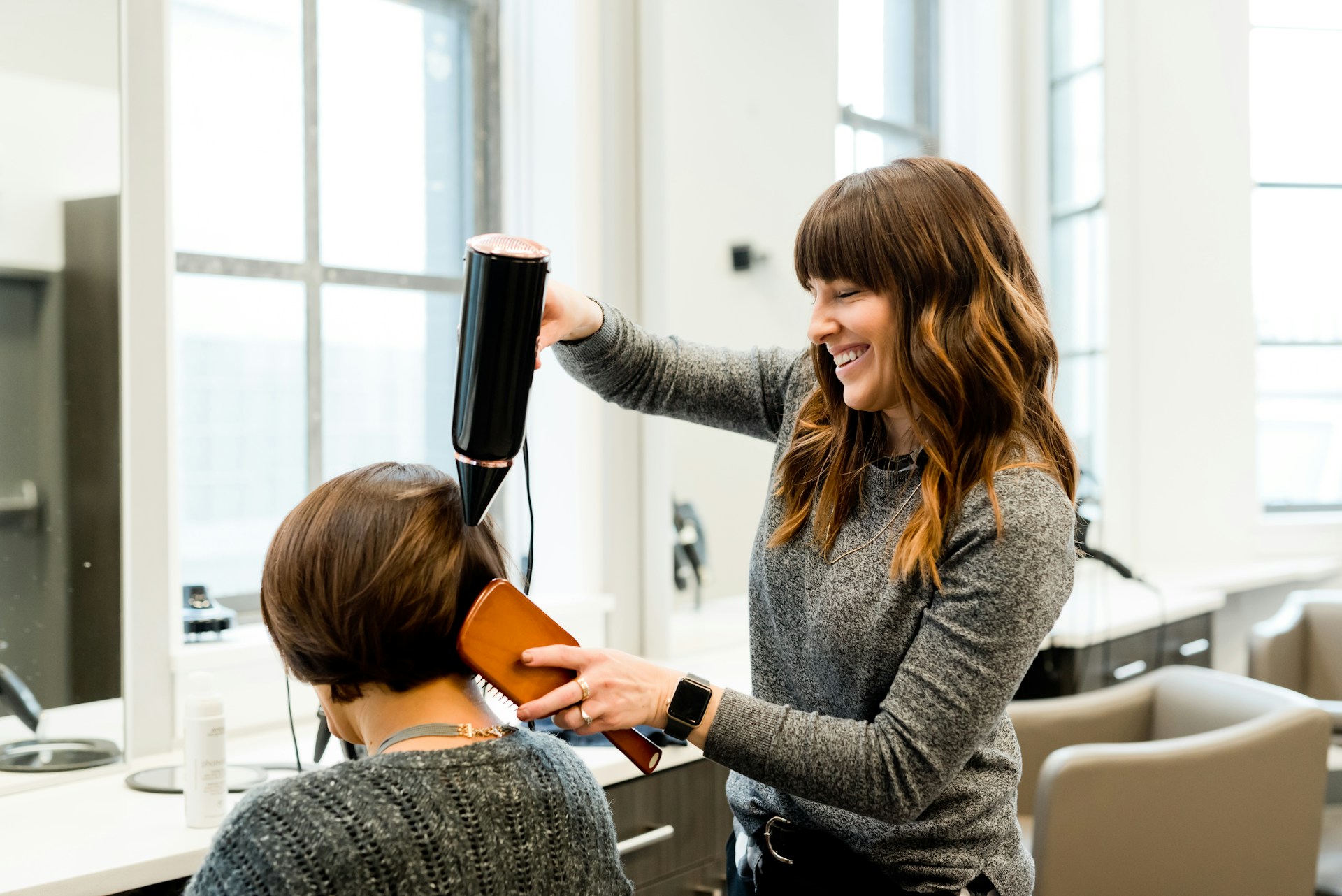
A caller dials the salon. The AI greets them, asks which service they need (haircut, color, blowout, etc.), whether they have a preferred stylist, and what day works best. It checks the specific stylist's calendar, factors in the correct service duration, and offers two or three available options. The caller picks a slot, gets an SMS confirmation, and the stylist sees the new booking appear on their schedule. Total time: under 3 minutes. Learn more about how this works in our salon AI receptionist guide.
HVAC Scheduling
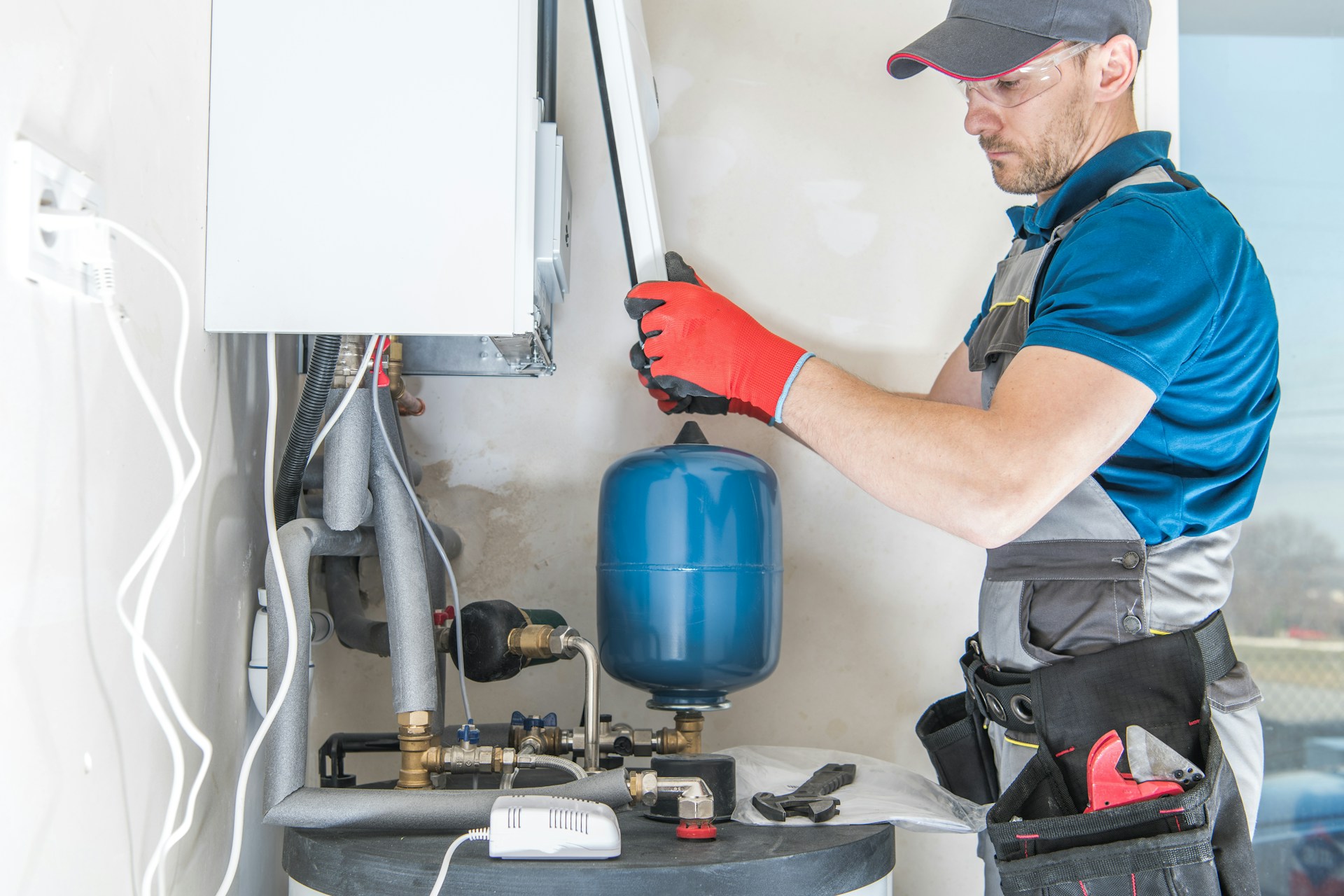
An HVAC customer calls about a broken air conditioner in July. The AI identifies the urgency, checks technician availability across service zones, and schedules a service window that accounts for travel time between jobs. The customer gets a confirmed window (e.g., "between 1 PM and 3 PM"), an SMS with the technician's name, and knows exactly when to expect the service call.
Dental Appointments
A patient calls to book a cleaning. The AI asks whether they are a new or existing patient, checks the hygienist's schedule, and books a 60-minute slot for new patients or a 45-minute slot for existing patients. It reminds the caller to bring their insurance card if they are new, sends a confirmation text, and adds the appointment with the correct duration and provider.
Plumber Dispatch
A homeowner calls about a leaking faucet. The AI determines it is not an emergency (no active flooding), checks the next available service window, and books the plumber for a morning or afternoon slot. For emergency calls, like a burst pipe, the AI can flag the call for immediate dispatch and escalate to the on-call technician.
Step-by-Step: Setting Up AI Scheduling With Greet
Getting started with AI-powered appointment scheduling is simpler than you might think. Here is how to set it up with Greet:
Step 1: Connect Your Google Calendar
In your Greet dashboard, navigate to the scheduling section and connect your Google Calendar. If you have multiple providers or technicians, connect each person's calendar. Greet syncs in real-time, so your availability is always accurate.
Step 2: Define Your Appointment Types
Set up your service catalog with the correct duration for each appointment type. For example:
Men's haircut: 30 minutes
Women's haircut and style: 60 minutes
Full color treatment: 180 minutes
HVAC service call: 120-minute window
Dental cleaning (existing patient): 45 minutes
Step 3: Set Your Business Hours and Buffer Times
Define when you accept appointments and how much buffer time you need between them. You can set different hours for different days and block off lunch breaks, staff meetings, or personal time.
Step 4: Customize Your Booking Conversation
Tell Greet what questions to ask during the booking process. This might include the service type, preferred provider, whether the caller is a new or returning customer, and any special requirements.
Step 5: Test and Go Live
Call your Greet number and walk through the booking flow yourself. Make sure the calendar updates correctly, the confirmation SMS arrives, and the conversation feels natural. Then route your business phone to Greet and start capturing every booking call.
Setup Timeline:
Calendar connection: 5 minutes
Appointment type configuration: 10-15 minutes
Business hours and buffer setup: 5 minutes
Conversation customization: 10-15 minutes
Testing and go-live: 10 minutes
Total: Under 45 minutes from start to live AI scheduling
The Bottom Line: More Appointments, Less Overhead
Every missed call that goes to voicemail is a potential appointment lost. Every callback that never connects is a booking that slips through your fingers. Every no-show that could have been prevented with a simple reminder is revenue that evaporates.
AI phone answering solves all of these problems simultaneously:
24/7 availability captures the 40% of booking calls that come after hours
Instant scheduling eliminates the callback cycle that loses 50% of potential bookings
Smart calendar integration prevents double-bookings and optimizes your schedule
Automated confirmations reduce no-show rates by up to 50%
Effortless reschedules keep your calendar full without adding staff workload
The result? More appointments booked, fewer no-shows, zero additional staff required, and a phone that never goes unanswered. For appointment-driven businesses, AI scheduling is not a future technology. It is a present-day competitive advantage that pays for itself many times over.
Start Booking More Appointments Today
Try Greet free for 7 days. Connect your calendar, customize your booking flow, and hear your AI receptionist schedule appointments in under 60 seconds.